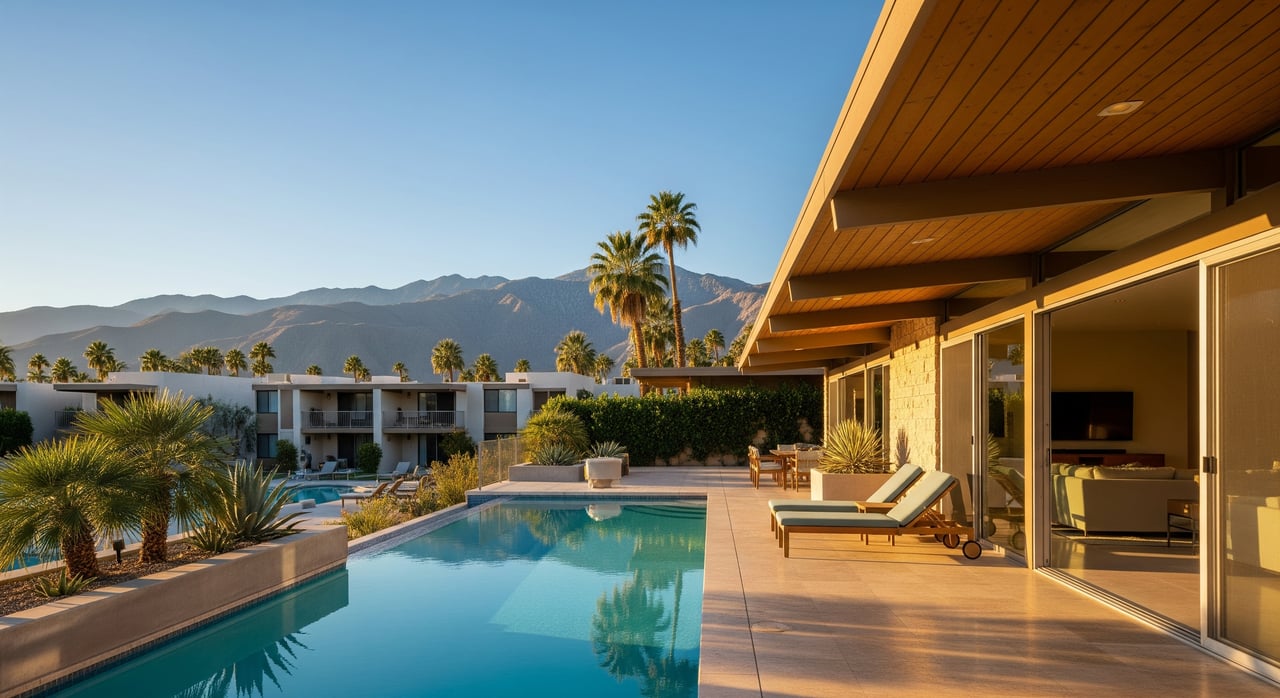
Wondering whether a condo or a single‑family home is the smarter buy in Palm Springs? In the desert, true cost of ownership can look different than it does in other markets. You want a lock‑and‑leave lifestyle without surprises, or the space and privacy of a home without runaway bills. This guide shows you the real cost drivers in Palm Springs, a simple way to model your monthly spend, and how to stress‑test an HOA or property before you commit. Let’s dive in.
What drives total cost
Palm Springs ownership costs fall into two buckets: one‑time purchase costs and recurring monthly costs. Both condo and single‑family buyers face taxes, insurance, and utilities, but who pays for exterior care, pools, and reserves changes the math. Knowing where costs live helps you compare apples to apples.
HOA dues and coverage
For condos, HOA dues often fund exterior insurance, roof and exterior maintenance, landscaping, common pools, management, and reserves. Some single‑family tracts also have master HOAs that cover gates and shared amenities. Ask for the current budget, last 2 to 3 years of financials, the latest reserve study, dues increase history, and any planned special assessments. Amenities, staffing, and insurance costs drive variability.
Insurance differences
Condo owners typically carry an HO‑6 policy that covers interiors, finishes, and personal property. The association usually insures the building shell and common areas. Single‑family owners carry HO‑3 or HO‑5 and insure the full structure, which generally means higher premiums. Consider whether you want earthquake coverage as a separate policy based on risk tolerance and lender guidance.
Property taxes in Riverside County
California’s Proposition 13 sets base property tax at about 1 percent of assessed value, plus locally approved assessments that vary by parcel. Your purchase price usually becomes the assessed value at acquisition unless an exclusion applies. Check Riverside County Assessor details for parcel‑specific rates and the homeowner’s exemption.
Utilities in the desert
Electricity is a major line item because of summer cooling. Southern California Edison serves the area and bills are often higher in peak months. Water costs matter too; irrigation, pool top‑up, and evaporative loss add up. Some HOAs include water or trash while others do not, so confirm what your dues cover and request the seller’s 12‑month utility history.
Maintenance and reserves
In condos, the HOA manages exterior, roof, and common‑area upkeep, funded through dues and reserves. You still budget for interior maintenance and any loss assessment coverage that your HO‑6 policy supports. Single‑family owners handle all exterior work and should set aside funds for HVAC servicing, roof, exterior paint, and other capital items on a multi‑year plan.
Pools and landscaping
Pools are common in Palm Springs and can be an HOA amenity or a private responsibility. For single‑family homes, plan for pool service, chemicals, and periodic equipment replacement. Landscaping in the desert favors low‑water plantings, but irrigation maintenance and seasonal care still apply. Pool size, water features, and irrigation design influence costs.
Special assessments and volatility
HOAs may levy special assessments for unexpected work or to strengthen reserves. Review meeting minutes and reserve studies to gauge risk. Utilities and insurance can also shift with market conditions, so allow room in your budget for increases over time.
Palm Springs factors to know
Local climate, seasonal use, and community rules all affect your bottom line. Understanding these Palm Springs nuances helps you choose the right fit.
Desert climate impact
High heat accelerates exterior wear compared to cooler climates. Roofs, exterior paint, decking, and pool finishes can age faster. Air conditioning demand drives electricity use, and pools require more top‑up water due to evaporation.
Seasonal use and rentals
Many owners use Palm Springs homes seasonally and want easy lock‑and‑leave options. Condos often deliver that convenience, but HOA rules may limit rentals or set minimum stay requirements. Check both city regulations and HOA policies if rental income is part of your plan.
Build your monthly model
Create a side‑by‑side comparison for a specific property using this checklist. Populate each line with real quotes, the HOA budget packet, and the seller’s utility history.
- Mortgage principal and interest
- Property tax (monthly share)
- Homeowners insurance (HO‑6 for condo, HO‑3 or HO‑5 for single family)
- HOA dues (note which utilities and services are included)
- Electricity average
- Water average
- Gas average
- Trash and recycling
- Pool service and chemicals (if private)
- Landscape maintenance (if private)
- Routine maintenance or owner reserve set‑aside
- Special assessment reserve (based on HOA disclosures)
- Other recurring items (pest, security, internet)
Sum these to get your total monthly ownership cost. Then stress‑test by adding a 10 to 20 percent buffer to utilities and insurance to see how sensitive your budget is.
Example side by side
The figures below are a hypothetical example only. Replace with real HOA documents, vendor quotes, insurance quotes, and 12 months of utility bills for the properties you are considering.
- Condo scenario: HOA $450 per month that covers exterior insurance, exterior maintenance, common pool, and landscaping; owner HO‑6 $40 per month; electricity and water $150 per month paid by owner; owner reserve set‑aside $50 per month. Estimated non‑mortgage total: about $690 per month.
- Single‑family scenario: No HOA; owner HO‑3 $150 per month; electricity and water $300 per month; pool service $150 per month; landscaping $150 per month; owner reserve set‑aside $200 per month. Estimated non‑mortgage total: about $950 per month.
Again, use Palm Springs quotes and HOA budgets in place of these placeholders.
Due diligence checklist
Doing the right homework up front keeps surprises off your balance sheet. Use these lists as you compare a condo and a single‑family home.
If you are buying a condo
- Current HOA budget, plus prior two years
- Most recent reserve study and funding plan
- HOA meeting minutes for the last 12 months
- Governing documents: CC&Rs, bylaws, rules
- Association insurance policy declarations
- Any pending special assessments or litigation
- Owner occupancy data and rental or short‑term rental rules
- Clarify which utilities and services are included in dues
If you are buying a single‑family home
- Seller’s disclosures and pest or termite report
- Roof, pool, and HVAC inspections; servicing history
- Irrigation details and available water usage history
- Last 12 months of electricity, water, gas, and trash bills
- Age and condition of major systems and estimated timelines for replacement
Which fits your goals
Choose a condo if you value convenience and shared amenity care, especially for seasonal use. Your dues centralize exterior upkeep and insurance, which can simplify budgeting. Choose a single‑family home if you want control over your space, private amenities, and landscaping, and you are comfortable managing vendors and setting aside reserves. The right answer is the one that aligns with how you live and how you like to manage costs.
Ready to compare specific properties side by side and build a realistic monthly model? Connect with Paige Maccio for a focused consultation that matches your lifestyle and budget.
FAQs
What does a Palm Springs condo HOA usually cover?
- Many HOAs fund exterior insurance, roof and exterior maintenance, landscaping, common area utilities, pools, management, and reserves; confirm specifics in the budget and CC&Rs.
How are property taxes calculated in Riverside County?
- Under Proposition 13, base tax is about 1 percent of assessed value plus local assessments, and your purchase price typically becomes the assessed value at acquisition.
Are utilities higher for single‑family homes than condos?
- Often yes because single‑family homes typically have larger A/C systems, private irrigation, and sometimes a private pool, while some condos include certain utilities in HOA dues.
Do I need earthquake insurance for a Palm Springs property?
- Earthquake coverage is separate from standard policies and is optional unless a lender requires it; decide based on risk tolerance and insurer guidance.
How can I estimate pool and landscape costs before I buy?
- Request vendor quotes based on pool size and equipment age, plus landscape square footage and irrigation setup, and ask the seller for 12 months of utility bills to gauge water and power usage.