If you love Palm Springs but do not want a second home to feel like a second job, lock-and-leave condo living can be a smart fit. Many buyers want sunshine, seasonal flexibility, and a home that is easier to maintain when they are away. In Palm Springs, that goal lines up well with the city’s resort identity, desert climate, and the structure of condo ownership. Let’s dive in.
Why lock-and-leave works in Palm Springs
Palm Springs is built around lifestyle, tourism, and seasonal use. The city openly positions itself as a place that welcomes visitors seeking a special experience, which helps explain why part-time occupancy feels natural in many parts of the local market.
The climate also plays a big role. NOAA climate normals for Palm Springs Regional Airport show a mean annual temperature of 75.6°F and just 4.61 inches of annual precipitation. Average highs reach 108.6°F in July and 108.1°F in August, which makes low-maintenance ownership especially appealing if you are only here for part of the year.
For many buyers, that is the heart of lock-and-leave living. You trade a larger private outdoor workload for easier seasonal use, more predictable maintenance, and access to shared amenities that support a resort-style routine.
What lock-and-leave condo living means
In California, many condos are part of a common interest development. That means you own your individual unit while also sharing ownership and responsibility for certain common areas through a homeowners association, or HOA.
This model can include apartment-style buildings, villas, or garden-style communities. When you purchase the unit, HOA membership is automatic, and that shared structure is what makes lock-and-leave ownership possible.
In practical terms, you still own your home, but you are not handling every exterior task on your own. Instead, some of the upkeep is organized and funded through the association, which can make the ownership experience feel more streamlined when you come and go throughout the year.
What buyers often get in Palm Springs condo communities
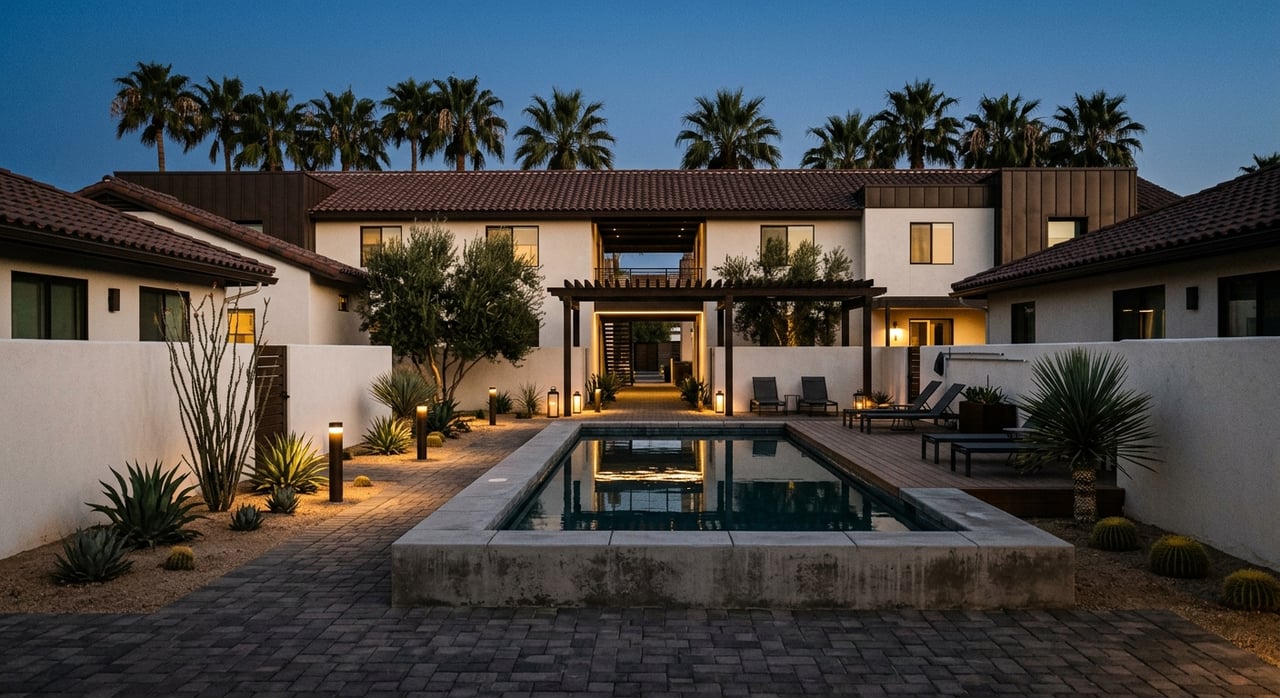
A major draw of condo and villa living is access to amenities that support an easy desert lifestyle. California Department of Real Estate guidance describes common shared features such as pools, clubhouses, tennis courts, and landscaped common areas.
In Palm Springs, those features often matter just as much as the floor plan. If your goal is to arrive, settle in quickly, and enjoy your time without managing a long to-do list, a community with shared spaces and professional common-area care can be very appealing.
That does not mean every community offers the same lifestyle. Some are simple and low-key, while others lean more heavily into resort-style amenities. The right fit depends on how you plan to use the property, how often you will be away, and how much hands-on maintenance you want to avoid.
What the HOA usually maintains
One of the biggest questions with lock-and-leave ownership is simple: what does the HOA actually handle? Under California Civil Code 4775, unless the governing documents say otherwise, the association is generally responsible for common-area repairs and maintenance, while you are responsible for your separate interest.
That general split is important, but the community’s governing documents control the details. In one development, the HOA may cover more exterior items. In another, owners may have more responsibility than they expected.
This is why the CC&Rs matter so much. Before you buy, you want a clear picture of what the association maintains, what still falls to you, and how responsibilities are handled when repairs are needed.
Why HOA dues matter more than many buyers expect
HOA dues are not just a fee for landscaping or pool cleaning. According to California Department of Real Estate guidance, assessments help fund day-to-day operations as well as long-term reserve maintenance.
That means dues support the systems that keep the community functioning over time. In a lock-and-leave setting, that can be part of the value. You are paying into a structure designed to manage shared upkeep, plan for future repairs, and help keep the property operating consistently whether you are in town or away.
You should also know that special assessments can happen if regular assessments are not enough. That is one reason it is important to understand not just the monthly dues, but also the financial health of the community behind them.
How to evaluate HOA governance and reserves
A condo community may look polished on the surface, but the documents tell the deeper story. California law requires qualifying boards to inspect major components at least every three years as part of reserve studies, which is one reason reserve planning matters when you are comparing communities.
The California Department of Real Estate advises buyers to review the CC&Rs and other governing documents, attend a board meeting if possible, and ask whether the community has adequate insurance, a solvent budget, and a sufficient reserve account. Those are not minor details. They help you understand how the community is run and how prepared it may be for future expenses.
If you plan to be away for long stretches, rules matter even more. DRE guidance also notes that owners are responsible for paying assessments and following the CC&Rs and rules, and owners can be fined for tenant or guest conduct that violates the rules or creates a nuisance.
Palm Springs short-term rental rules to know
This is one of the most important topics for second-home and investment-minded buyers. In Palm Springs, vacation rentals and homesharing are treated as secondary uses, and the city FAQ says they are allowed only in single-family homes. Apartments and multifamily units cannot be used as vacation rentals.
That means many condo buyers should not assume short-term rental use is available. If rental income is part of your plan, this point needs careful review before you move forward.
Palm Springs also applies neighborhood-based caps. If a neighborhood is at or above a 20% vacation-rental-to-residential-household percentage, a new application is returned or placed on a waitlist. Permit eligibility is therefore not just citywide. It can vary by neighborhood conditions at the time you apply.
For properties that do qualify for short-term rental use, the city requires a registration certificate, evidence of at least $500,000 in liability insurance, and ongoing local tax compliance, including monthly transient occupancy tax reporting and the 1% TBID assessment on stays under 28 days.
For many lock-and-leave condo buyers, longer stays may be the more realistic lens. Stays of 29 days or more fall outside the city’s short-term ordinance, so seasonal use and longer furnished occupancy may align better than vacation-rental assumptions in many condo settings.
Why rental assumptions need extra due diligence
In Palm Springs, rental use can involve three separate layers of review. You need to understand the city’s rules, any neighborhood cap issues, and the HOA’s own governing documents.
If a property sits in an HOA, city materials state that the HOA board or manager must provide a letter saying the proposed use does not violate the CC&Rs. That means even if you are focused on lifestyle first and income second, it is wise to verify the rules early.
This is especially important for out-of-area buyers who want a condo as a second home today and flexibility later. A clear understanding of permitted use can help you avoid buying the right unit in the wrong regulatory setting.
Insurance questions condo buyers should ask
Insurance is another area where lock-and-leave buyers should slow down and get specific. The key question is not just whether the HOA has insurance, but what the HOA’s master policy actually covers and what you still need to insure personally.
You should also ask whether earthquake coverage or loss-assessment coverage should be considered. California Department of Insurance guidance notes that HOA coverage may not extend to earthquake damage affecting common areas or exterior structures.
For a part-time owner, knowing these details ahead of time can reduce surprises. It also helps you budget more accurately for the full cost of ownership.
A practical checklist before you buy
If you are considering lock-and-leave condo living in Palm Springs, these are the core items worth reviewing before you make an offer:
- CC&Rs and community rules
- HOA budget and reserve information
- Recent board minutes, if available
- HOA insurance details and what the master policy covers
- The maintenance split between the association and the owner
- Any rental restrictions or occupancy rules
- Whether your intended use aligns with current Palm Springs regulations
This kind of review helps you move beyond the photos and amenities. It gives you a clearer view of how the property will function in your day-to-day life and over the long term.
Is a Palm Springs lock-and-leave condo right for you?
For many buyers, the answer is yes. If you want a home base in the desert without taking on the full upkeep of a detached property, a condo can offer a more manageable path to seasonal living.
The appeal is easy to understand in Palm Springs. You get a city known for leisure and design, a climate that encourages low-maintenance ownership, and communities built around shared amenities and organized upkeep.
The key is buying with clear eyes. The best lock-and-leave experience comes from matching your lifestyle goals with the right HOA structure, the right community rules, and the right expectations around maintenance and rental use.
If you want help comparing condo communities, reviewing how a property fits your second-home goals, or planning for leasing and ongoing ownership support, Paige Maccio can help you move forward with clear local insight.
FAQs
What does lock-and-leave condo living mean in Palm Springs?
- It usually means owning a condo or villa in a community where shared maintenance and amenities make it easier to leave the property for extended periods and return with fewer upkeep demands.
What does an HOA usually maintain in a Palm Springs condo community?
- In California, the association generally maintains common areas unless the governing documents say otherwise, while you are typically responsible for your separate interest.
What do HOA dues cover in a Palm Springs condo?
- HOA dues generally fund regular operations and long-term reserve maintenance, and special assessments may be used if regular assessments are not enough.
Can a Palm Springs condo be used as a short-term rental?
- Under current Palm Springs rules, vacation rentals are allowed only in single-family homes, so many condos and multifamily units cannot be used as vacation rentals.
What documents should you review before buying a Palm Springs condo?
- You should review the CC&Rs, community rules, budget, reserve information, insurance details, and recent board materials if available.
What insurance questions matter when buying a Palm Springs condo?
- You should confirm what the HOA master policy covers, what you need to insure personally, and whether coverage such as earthquake or loss-assessment protection should be considered.